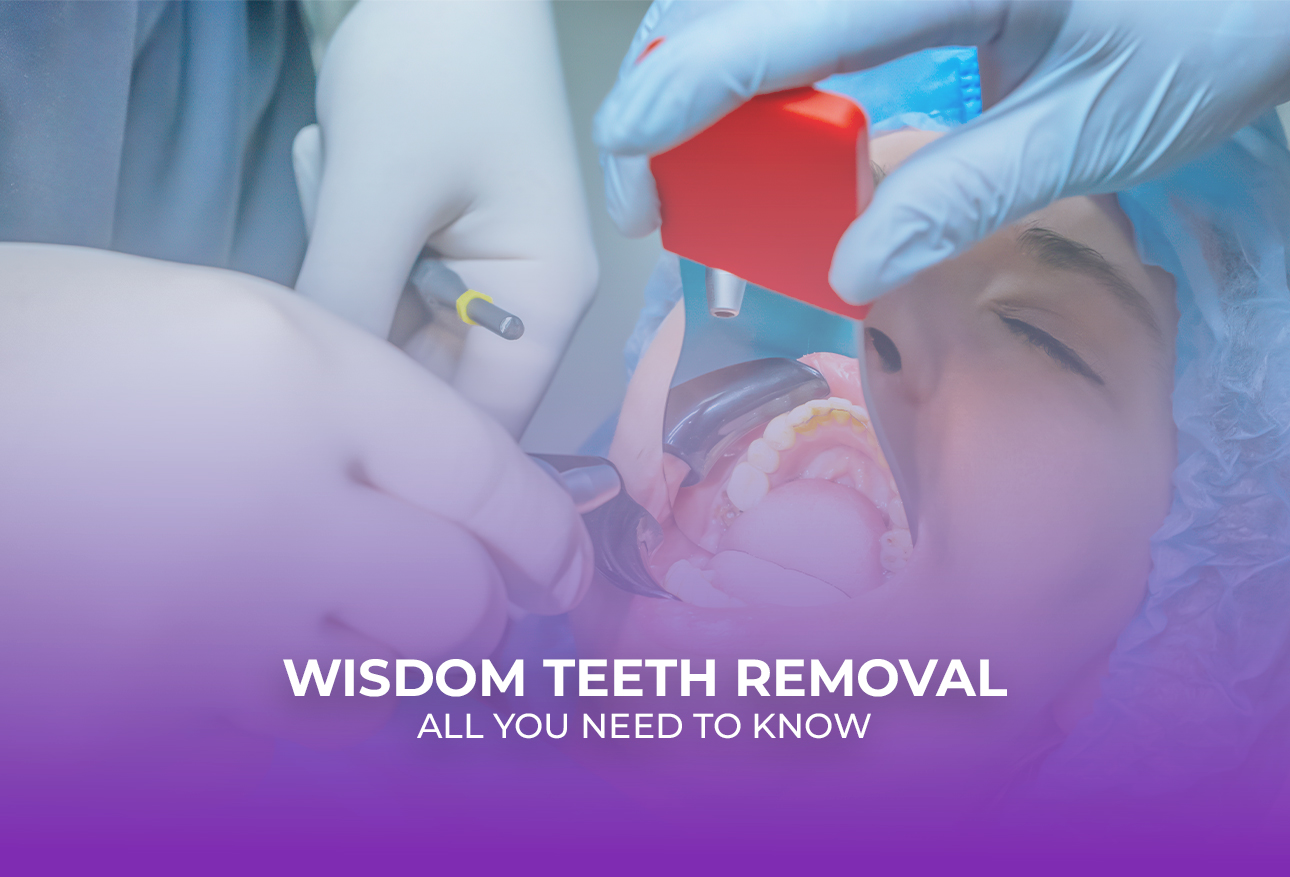
You may need to have a wisdom tooth removed if it is impacted (growing in the wrong position) or if there isn’t enough space for it to come through properly. This can lead to a range of dental problems. Wisdom tooth removal may be recommended to prevent future complications or to treat pain, infection, or other existing issues.
HERE’S WHEN YOU NEED A WISDOM TOOTH REMOVAL:
1. INADEQUATE SPACE FOR TOOTH ERUPTION
When there isn’t enough room in the upper or lower jaw, a wisdom tooth may become impacted or only partially erupt.
This can cause discomfort, swelling, and make it difficult to keep the area clean. Over time, poor cleaning can increase the risk of dental problems.
Our specialist dentist may recommend removing the tooth to help prevent future complications.
2. WISDOM TOOTH PRESSING INTO NEIGHBORING TEETH
An impacted wisdom tooth can put pressure on the tooth next to it.
This pressure may damage the neighboring tooth or its root and can contribute to tooth decay, crowding, or changes in your bite.
Removing the wisdom tooth early can help protect the surrounding teeth and prevent long-term damage.
3. INFECTION OR DECAY ASSOCIATED WITH THAT TOOTH
A partially erupted wisdom tooth can easily trap food and bacteria beneath the gum.
This may lead to tooth decay, gum infections, bad breath, pain, and swelling.
If the tooth cannot be restored successfully, removing it is usually the most effective treatment. Our Dental Care in Al Nahda focuses on treating wisdom tooth infections early to preserve your overall oral health whenever possible.
4. YOU’RE IN PAIN OR EXPERIENCING FACIAL SWELLING
Ongoing pain, tenderness, or swelling at the back of your mouth may be a sign of an impacted or infected wisdom tooth.
In some cases, the discomfort can spread to your jaw, ear, head, or nearby areas.
A prompt dental examination can help identify the cause and prevent the problem from getting worse. If you experience persistent pain or swelling, our team offers prompt Wisdom Tooth Removal / Surgical Tooth Removal in Al Nahda after a thorough dental assessment.
5. CROWDING OR TOOTH MISALIGNMENT DUE TO WISDOM TOOTH
Wisdom teeth can place pressure on the surrounding teeth, especially when there isn’t enough space in the jaw.
Although they are not always the main cause of crowding, they can contribute to bite problems in some cases.
Our specialist dentist will assess your teeth and X-rays to determine whether removal is the right option. As a Top Dental Clinic in Al Nahda, we use digital imaging to determine whether wisdom tooth removal is necessary for your individual case.
6. WHEN ORAL HYGIENE IN THE WISDOM TOOTH AREA BECOMES IMPOSSIBLE
Because wisdom teeth are located at the very back of the mouth, they can be difficult to brush and floss properly.
As a result, plaque and bacteria may build up, increasing the risk of tooth decay, gum disease, and repeated infections.
These infections can also affect the surrounding healthy teeth and gums. In such cases, removing the wisdom tooth is often the best way to eliminate the source of infection and help prevent future problems. Maintaining oral hygiene becomes easier after treatment with expert care from the Best Dentist in Qusais Dubai.
PLANNING YOUR WISDOM TOOTH REMOVAL
At Total Dental Care, an Affordable Dental Clinic in Al Nahda, we explain every step of the procedure and help you choose the most suitable treatment option.
The first step in planning a wisdom tooth extraction is scheduling a dental examination. During your visit, our specialist dentist will assess the position of your wisdom teeth, their anatomy, and the surrounding structures.
If removing the tooth is the best option for you, our specialist dentist will explain the procedure in detail and discuss the available anesthesia or sedation options, if needed.
If you think you may need your wisdom teeth removed, contact Total Dental Care to schedule a dental examination.
Our team is committed to providing the Best Dental Services in Al Nahda, Dubai, ensuring every patient receives personalized care and clear guidance before and after treatment.
Wisdom Tooth Extraction – Frequently Asked Questions
1. DO ALL WISDOM TEETH NEED TO BE REMOVED?
Answer: No. Wisdom teeth only need to be removed if they are causing problems or are likely to cause problems in the future. If they come through in the correct position, are easy to clean, and do not affect the surrounding teeth or gums, our specialist dentist may simply monitor them during your regular dental check-ups.
2. CAN WISDOM TEETH CAUSE PROBLEMS EVEN IF THEY DON’T HURT?
Answer: Yes. Wisdom teeth can remain painless while still causing hidden problems such as tooth decay, gum infections, crowding, or damage to nearby teeth. Regular dental examinations and X-rays help detect these issues before symptoms appear.
3. WHAT HAPPENS IF A WISDOM TOOTH BECOMES IMPACTED?
Answer: An impacted wisdom tooth may press against the tooth next to it, leading to pain, enamel damage, cavities, gum disease, or difficulty cleaning the area. Our specialist dentist will recommend the most suitable treatment based on the position of the tooth.
4. AT WHAT AGE DO WISDOM TEETH USUALLY APPEAR?
Answer: Wisdom teeth usually begin to erupt between the late teenage years and the mid-twenties. However, they may continue developing until around the age of 30.
5. HOW SHOULD I PREPARE FOR WISDOM TOOTH EXTRACTION?
Answer: Before the procedure, you’ll have a consultation where our specialist dentist will examine your teeth, explain the treatment plan, and discuss your anesthesia or sedation options. If advised, avoid eating or drinking before your appointment and arrange for someone to take you home if sedation will be used.
6. HOW LONG DOES WISDOM TOOTH REMOVAL TAKE?
Answer: The procedure usually depends on how many wisdom teeth need to be removed and whether they are impacted. In most cases, the treatment is completed within about an hour.
7. WHAT FOODS ARE SAFE TO EAT AFTER WISDOM TOOTH REMOVAL?
Answer: Stick to soft foods such as yogurt, mashed potatoes, puddings, smoothies (without using a straw), ice cream and soup (once it has cooled). As your tooth extraction area heals, you can gradually return to your normal diet.
8. WHAT SHOULD I AVOID AFTER WISDOM TOOTH EXTRACTION?
Answer: Avoid smoking, using tobacco products, drinking through a straw, eating hard or crunchy foods, and consuming very hot foods or drinks. Be sure to follow any additional aftercare instructions given by our specialist dentist, as this helps reduce the risk of complications and supports faster healing.
9. HOW LONG DOES RECOVERY TAKE AFTER WISDOM TOOTH EXTRACTION?
Answer: Most people start feeling much better within a few days. Complete healing usually takes about a week or longer, depending on the complexity of the extraction and how your body heals.
10. HOW CAN I REDUCE PAIN AND SWELLING AFTER THE PROCEDURE?
Answer: Apply a cold pack to the outside of your cheek during the first 24 hours, keep your head elevated while resting, take any prescribed or recommended pain medication as directed, and carefully follow your dentist’s aftercare instructions. These steps help reduce swelling, ease discomfort, and support a smooth recovery.
If you are experiencing any of the above mentioned wisdom tooth problems me—or have any other dental concerns—visit our specialist dentist at Total Dental Care. If you’re looking for Wisdom Tooth Removal in Al Nahda, our specialist dentist at Total Dental Care, a trusted Dental Clinic in Al Nahda, provides comprehensive evaluation and treatment tailored to your dental needs.
Be assured—we’ll treat your teeth well